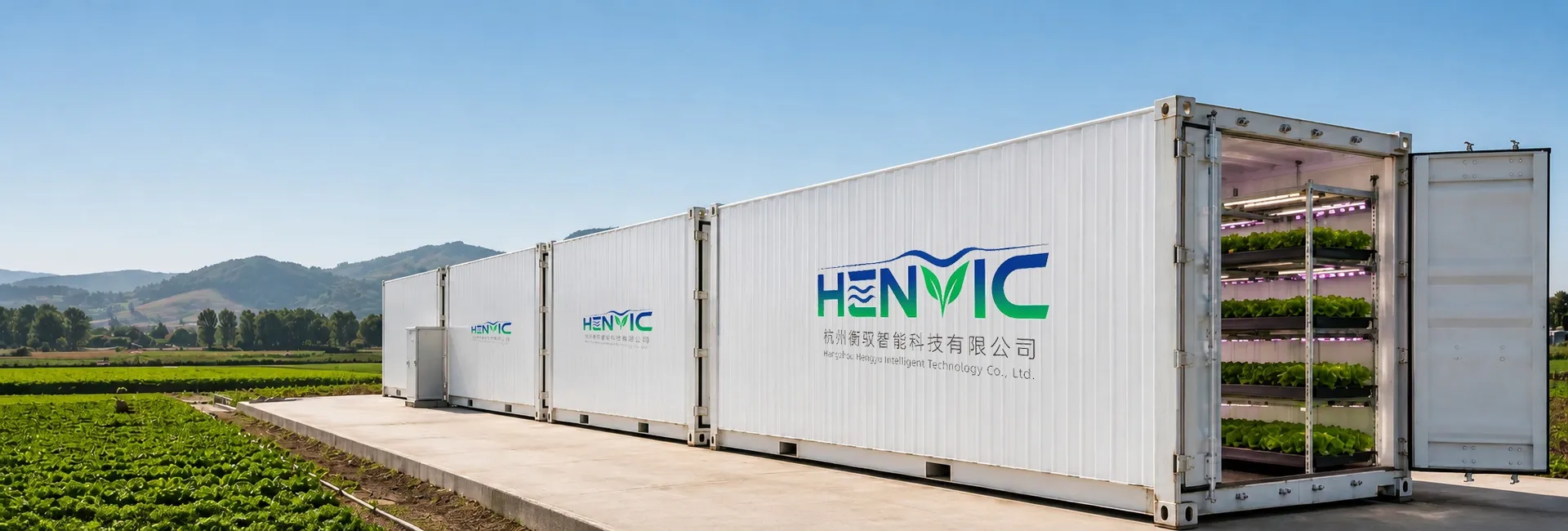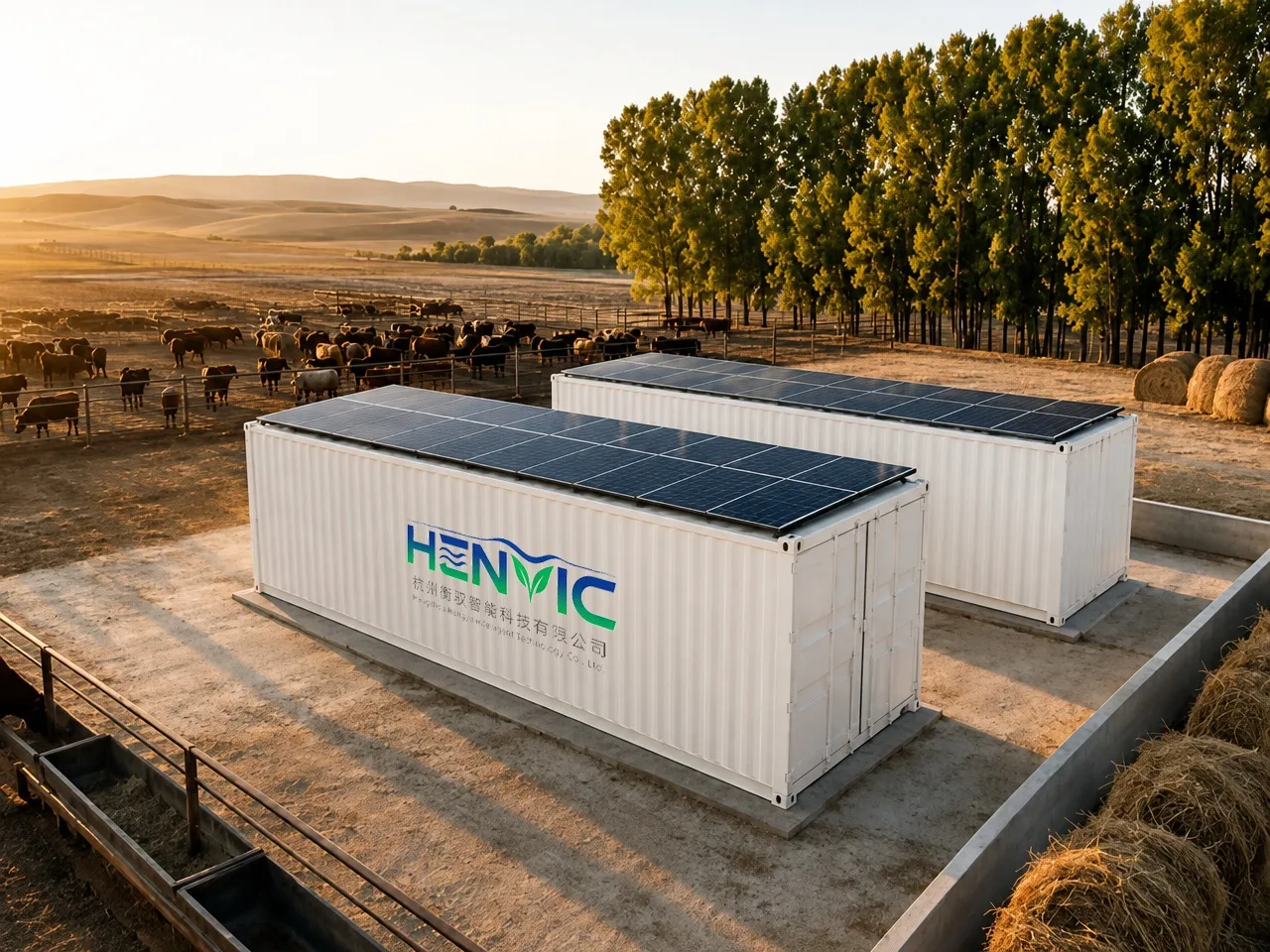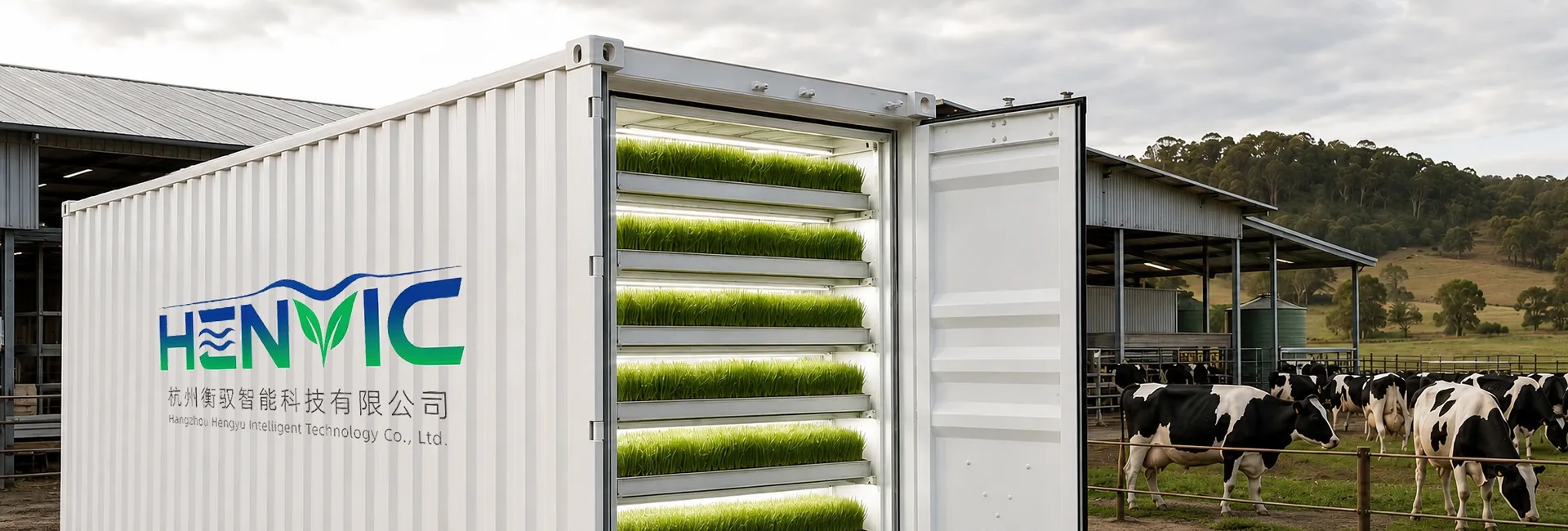
A shipping container is a strange place to grow food. It has no soil, no windows, and no drain. It was designed to carry televisions across an ocean, not to raise crops. And yet the container has become one of the more serious platforms for controlled-environment agriculture, and the reason is not that hydroponics and LEDs happen to fit inside it. The reason is that the ISO container is the only structure most people can buy that is simultaneously standardized, rated for stacking and transport, and cheap enough to treat as a disposable envelope for a climate.
Strip a container farm down and you find that the enclosure — not the grow system, not the lights — is the real asset. Once you accept a sealed volume of roughly 28 to 30 square meters of floor area and 67 cubic meters of air, every environmental variable stops being weather and becomes a design parameter. Photoperiod, spectrum, vapor pressure deficit, carbon dioxide, nutrient concentration, root-zone temperature: all of these can be held inside tolerances that no greenhouse in a real climate can match, and — more importantly — held identically across a fleet of units scattered across different continents. That reproducibility is the product. A crop from a container in Rotterdam and one from a container in Dubai should be, measurably, the same crop.
This is the argument that gets missed when people frame container farming as a novelty or a toy. The claim is not that a box can out-yield a field. It cannot, and it will never come close on cost per calorie. The claim is that a box can produce a known, repeatable, contamination-free product on demand, close to where it is consumed, and that in some markets that bundle is worth far more than the same mass of commodity produce.
The 12-meter high-cube container is the workhorse, and its dimensions matter more than they appear to. The interior height allows three to six growing tiers, which multiplies canopy area per unit of footprint by the same factor. That vertical multiplication is the whole point: land is expensive, and a container farm's real output is a function of how efficiently it converts square meters of ground into square meters of leaf surface.
But tiering also creates the central engineering problem of the entire system. The lower levels are shadowed and thermally stratified. Warm, humid air rises; cold air pools. If you design airflow as a two-dimensional plan — intake here, exhaust there — you will find that your bottom tier runs several degrees cooler and much more humid than your top tier, and that one tier dries out faster than another. Airflow in a container farm has to be designed as a three-dimensional field, with attention to the boundary layer at each leaf surface, the mixing between tiers, and the dead zones behind trays and under benches where mold establishes itself first.
The container's transportability is often oversold and sometimes genuinely decisive. A fleet of containers can be shipped, stacked, and recommissioned without being rebuilt, which means a farm can be relocated as a unit. For applications where the growing site is temporary — a disaster zone, a construction camp, a military forward base, a research station — that mobility is the entire value proposition, and no greenhouse can match it. For a permanent urban farm, mobility matters less, and the container's main advantage narrows to its structural rating and its global compatibility with freight infrastructure.
There is a subtler point about standardization. Because every 12-meter container has the same footprint, the same corner castings, and the same rated stacking load, an entire supply chain has grown up around re-fitting them: insulated panels, drop-in racking, modular HVAC skids, and purpose-built lighting. An operator can buy a container shell, a fit-out kit, and assemble a farm with far less bespoke engineering than a greenhouse of equivalent control would require. That modularity lowers the barrier to entry, and it also lowers the cost of failure — a container farm that does not work can be sold, moved, or converted.
Still, it is worth being clear about what container farming does not solve. It does not solve the energy problem, which is the dominant operating cost and the subject of a separate piece. It does not solve the crops that need high daily light integrals — wheat, rice, potato, and maize are simply out of reach at any realistic electricity price. And it does not solve the biology that makes dense, wet, warm plant canopies a magnet for pathogens.
What it does solve is control. In a field, the grower negotiates with weather, pests, and season. In a container, the grower holds the equator steady and sets the season by hand. Everything downstream — the quality, the shelf life, the freedom from pesticides, the ability to sell into premium markets — flows from that one capability. The box is not the farm. The box is the climate, and the climate is what you are actually selling.
Whether that is a good business depends on the price of power relative to the value of the crop, and that ratio varies enormously by geography and by product. Which is why the honest way to think about container farming is not "is it better than a field" but "for which crops, in which markets, at which electricity price, does controlled production beat the alternatives." Answer that question properly and the container stops looking odd. It starts looking like the most modular, most portable, most standardizable answer to a very specific production problem.