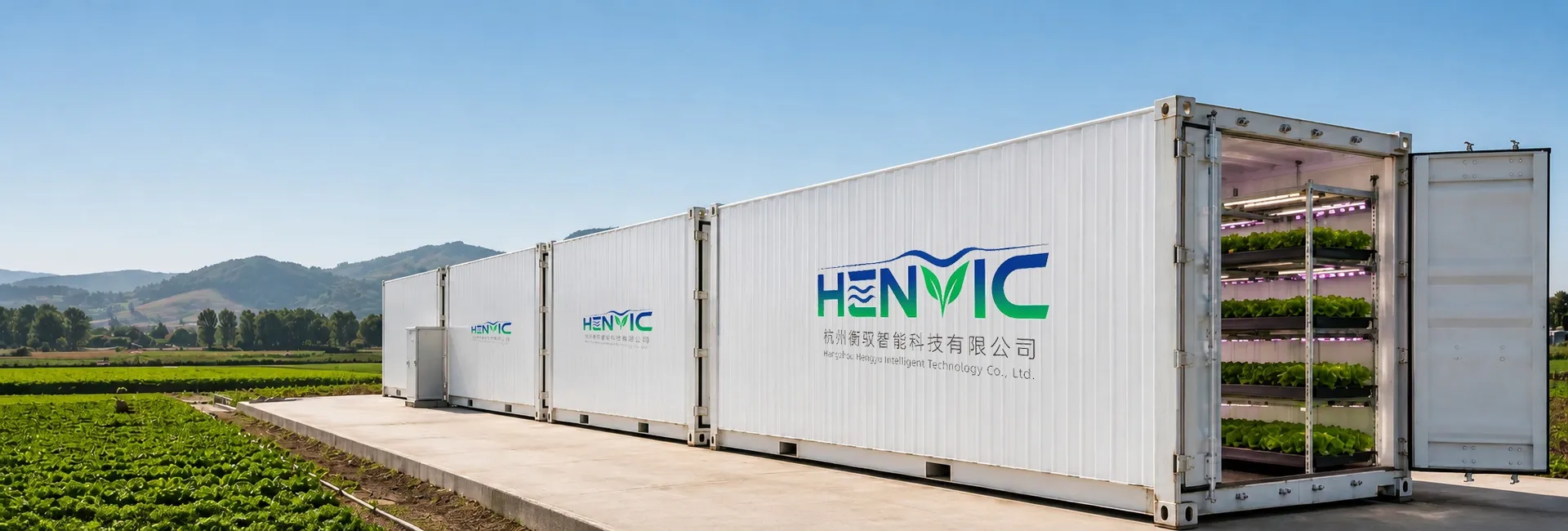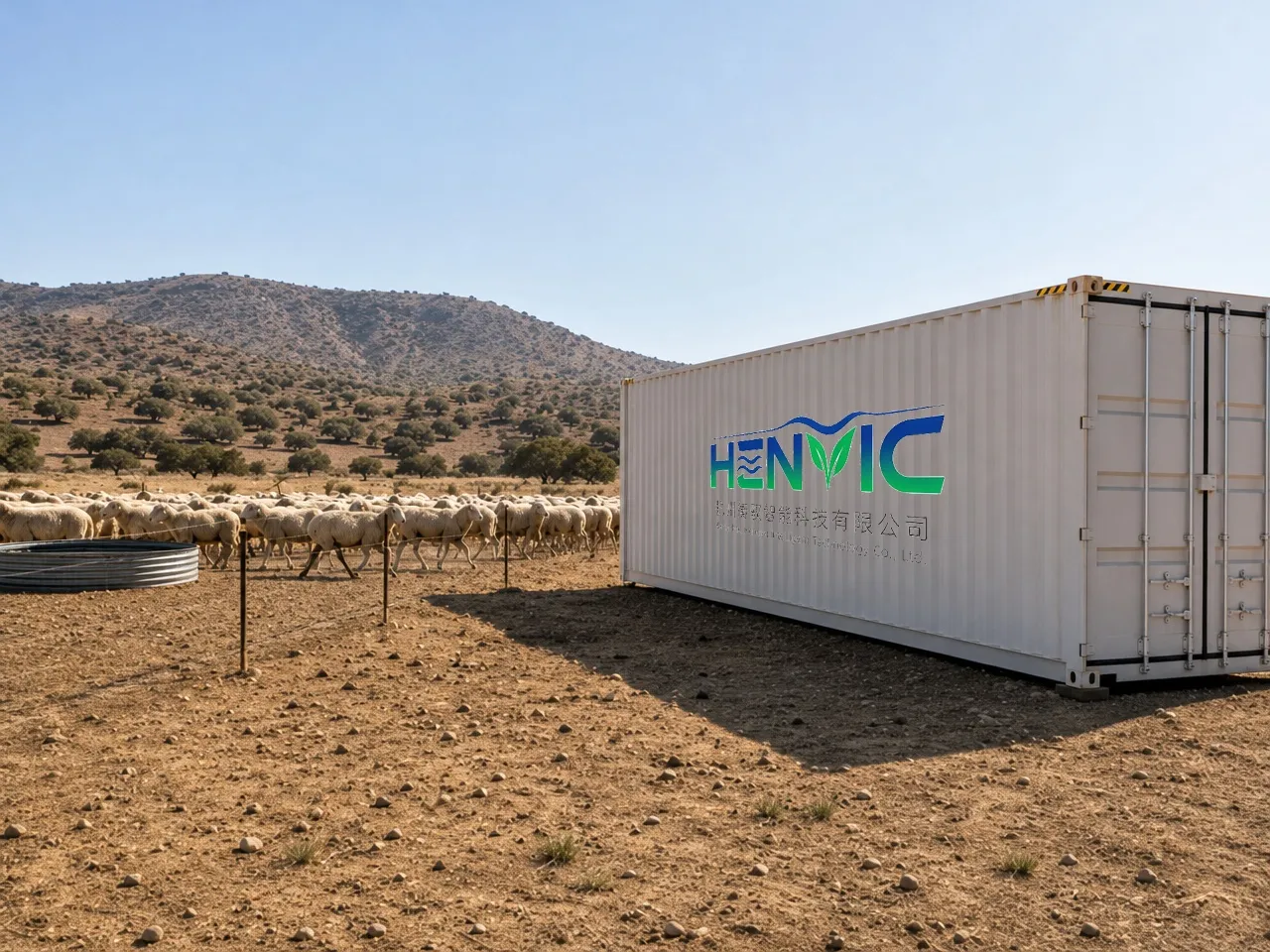
A container farm lives or dies by its climate control. Inside the metal shell, every factor that open-field agriculture takes for granted—temperature, humidity, airflow, carbon dioxide—must be actively managed. The environmental control system is therefore not a peripheral accessory but the central nervous system of the operation, and its energy demands dominate the economics of container growing.
The Controlled Variables
The primary variables are temperature, relative humidity, air movement, and CO₂ concentration. Temperature governs metabolism: too warm and plants become leggy or bolt; too cool and growth slows. Humidity affects transpiration and disease pressure; excessive humidity encourages mold and fungal problems in the dense, still air of an enclosed space. Air movement is essential to prevent microclimates, strengthen stems, and distribute heat and moisture evenly. CO₂ enrichment, when used, accelerates photosynthesis by raising carbon availability above ambient levels.
Each variable interacts with the others. Raising temperature lowers relative humidity unless water vapor is added; increasing lighting raises both temperature and transpiration, which in turn raises humidity. The control system must manage these couplings rather than treat each variable in isolation.
Heating, Cooling, and Insulation
The container's steel shell is an excellent conductor and a poor insulator, which makes thermal management the largest energy challenge. On a hot day, the metal absorbs solar radiation and internal lighting and equipment add heat; on a cold night, heat leaks outward. Effective control requires both active systems and passive measures.
Active cooling typically relies on air conditioning or chillers, sized to remove the combined heat of lights, pumps, fans, and solar gain. Heating may be needed in cold climates and can be provided by heat pumps, which are far more efficient than resistive heating. Because lighting produces substantial heat, heat recovery from lamp cooling can offset heating needs in cooler conditions.
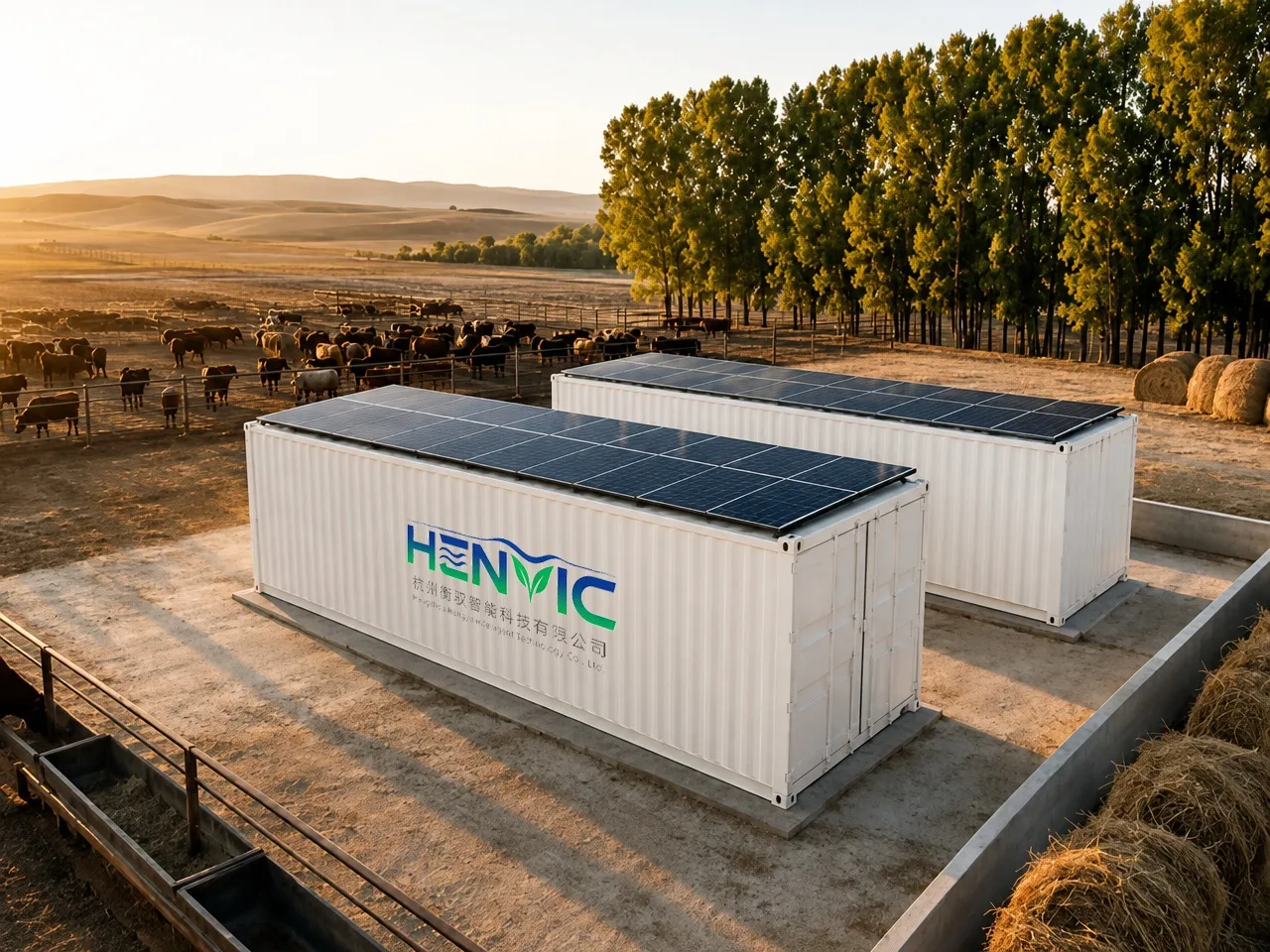
Passive measures matter enormously. Insulation of walls, ceiling, and floor reduces the load on active systems. Reflective interior surfaces improve light utilization and reduce waste. White or reflective exterior coatings reduce solar absorption. Shading or placement under cover cuts direct sun exposure. Together, these measures can substantially reduce the size and running time of mechanical systems.
Ventilation and Dehumidification
Air exchange serves several purposes: it removes excess heat and humidity, replenishes CO₂ consumed by photosynthesis, and prevents the buildup of ethylene and other volatile compounds. But ventilation also loses conditioned air, so it must be managed carefully, often with heat exchangers that transfer energy between outgoing and incoming air.
High humidity is a persistent problem because plant transpiration releases large amounts of water vapor in a sealed volume. Dehumidification—via condensation coils, desiccant systems, or controlled ventilation—is essential to prevent condensation on leaves and equipment and to suppress disease. The dehumidifier load can be significant and must be included in energy calculations.
The Energy Equation
Energy is the defining constraint of container agriculture. Lighting, cooling, dehumidification, and pumping all consume electricity, and in many climates the total can be substantial per kilogram of produce. The economics of a container farm therefore depend heavily on local electricity prices, the efficiency of the equipment, and the value of the crops produced.
Several strategies reduce consumption. LED lighting with high efficacy delivers more photons per watt than older technologies, cutting both lighting energy and the cooling load the lights impose. Variable-frequency drives on compressors and fans allow output to match demand rather than running at fixed maximum. Heat recovery reclaims waste energy from lights and refrigeration. Optimal scheduling, such as shifting lighting to off-peak hours where tariffs differ, can reduce cost without changing total consumption. And efficient insulation and reflective surfaces reduce the load before it reaches the equipment.
The Role of Control
The control system determines how well all these components cooperate. Sensors monitor conditions continuously; a controller adjusts cooling, heating, ventilation, dehumidification, and lighting to hold setpoints while minimizing energy use. Good control strategy exploits the thermal mass of the system, anticipates changes rather than reacting to them, and avoids the simultaneous heating and cooling that plagues poorly tuned systems.
Advanced approaches add modeling and prediction. By modeling how the container responds to weather and internal loads, the controller can pre-emptively adjust, and by learning from data it can refine its strategy over time.
Design Trade-offs
Every container farm balances competing objectives. Tighter environmental control improves quality and yield but costs more energy. Higher planting density improves output per unit volume but stresses the climate system and increases disease risk. CO₂ enrichment boosts growth but adds cost and complexity. The optimal configuration depends on the crop, the climate, and the price of power.
What remains constant is the principle: in an enclosed growing environment, climate is not a given but a design output. The skill of container farming lies in engineering and operating that climate with precision—cool enough, humid enough, ventilated enough, and always efficient enough to make the numbers work.