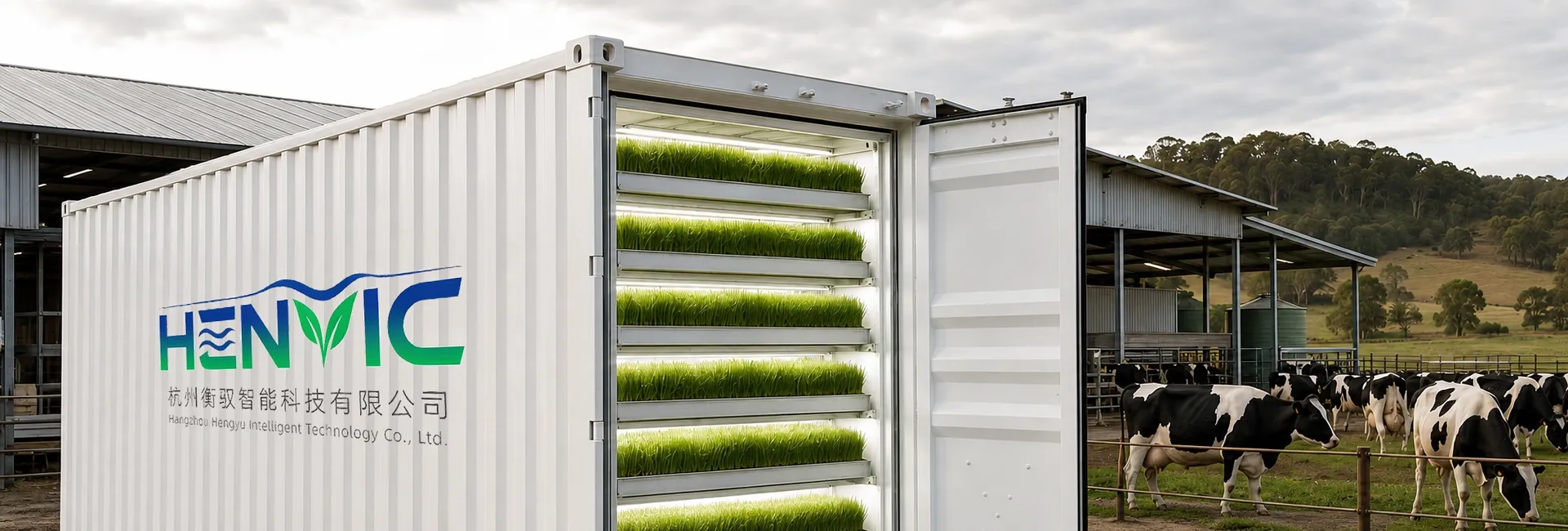
Container Farm40 ft Vegetable Container Farm Hydroponic Oat and Wheat Fodder Programme
PRODUCT OVERVIEW
Hydroponic Oat and Wheat Fodder behaves predictably here: 8 - 10 days per cycle, marketable weight per cut and 2,400 - 3,200 kg per cycle. Predictability means you can price, contract and deliver weekly instead of betting the crop on weather.
Tier heights and aisle width are set for standing work, so harvesting, replanting and cleaning avoid stooping and reduce fatigue over long shifts.
Rotating with wheat balances supply and suits farms building their own fresh-fodder line.
Contract farming and cooperatives schedule backwards from the contract: 2,400 - 3,200 kg of Hydroponic Oat and Wheat Fodder per cycle and 36 - 45 cycles a year map directly onto delivery terms.
CROP AND OUTPUT DATA
Variety | Hydroponic Oat and Wheat Fodder (Fodder) |
Growing cycle (transplant to harvest) | 8 - 10 days |
Unit weight | marketable weight |
Plants per cycle | approx. 3,300 - 5,800 |
Yield per cycle | 2,400 - 3,200 kg |
Cycles per year | 36 - 45 |
Annual output (estimate) | 86,400 - 144,000 kg |
Propagation | Direct seeding |
Crop difficulty | Easy |
Figures follow the 40 ft standard container baseline with about five growing tiers. Yield per cycle and annual output are estimates; actual results vary with tier count, light recipe, CO2 level and crop management.
KEY ADVANTAGES
· 36 - 45 cycles a year keep the same unit producing continuously without a seasonal break.
· Batch records of temperature, EC, pH and light trace each harvest back to a specific tier.
· The closed hydroponic loop uses far less water than soil culture, which suits water-scarce sites.
· Rated Easy in difficulty and run from process cards, the crop is workable by general staff.
· Seedlings account for roughly 5 - 12% of operating cost, keeping the cost structure transparent.
· About five tiers lift output per square metre to roughly five times open-field levels.
· Controlled cycle: Hydroponic Oat and Wheat Fodder reaches harvest 8 - 10 days after transplant, more than 50% faster than open-field production.
· At 15 - 30 kg of fresh greens a day, one unit matches a mid-sized restaurant or community scheme.
CONTAINER CONFIGURATION
Footprint | 12.19 x 2.44 x 2.90 m (40 ft ISO container) |
Growing system | Approx. 5 tiers, hydroponic or aeroponic |
Scale per cycle | 3,300 - 5,800 plants |
Temperature | 18 - 24 °C, set per variety |
Relative humidity | 60 - 75% |
CO2 concentration | 800 - 1,200 ppm |
Lighting | LED recipe, dimmable per tier |
Nutrient solution | Closed loop with automatic EC and pH control |
Energy reference | 0.8 - 1.2 kWh per kg of fresh greens; electricity about 60 - 70% of operating cost |
Control and monitoring | PLC, touchscreen HMI, remote monitoring and alarms |
Delivery | Pre-commissioned at the factory, set and connected on site |
CLIMATE AND CONTROL
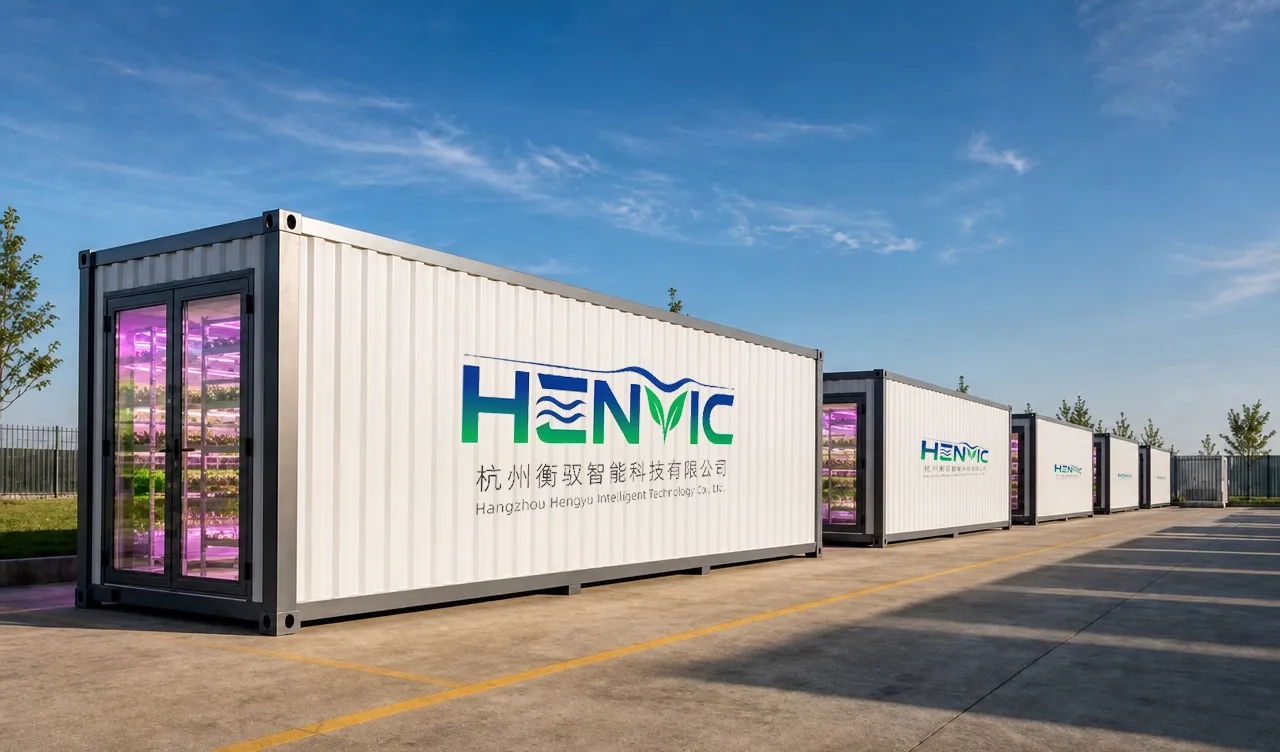
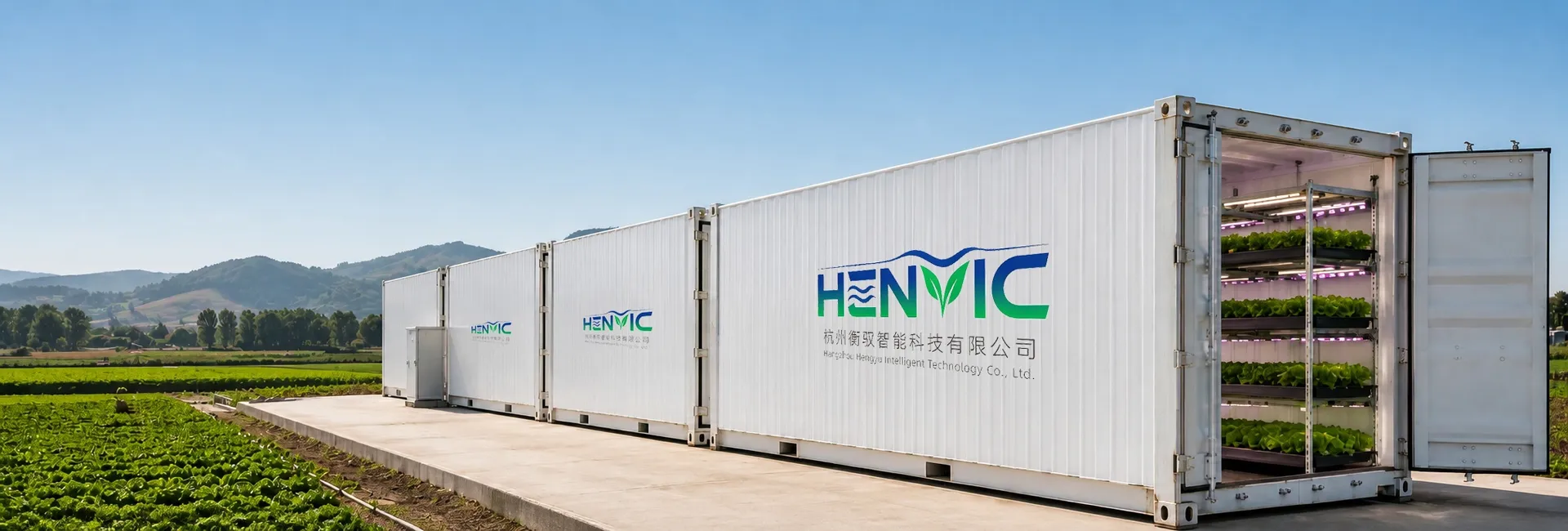
The unit uses a standard 40 ft shell with about five growing tiers, hydroponic or aeroponic depending on variety. Insulation, fresh air, dehumidification and LED lighting form a closed environment: outside climate affects energy use, not the crop.
Nutrient solution runs from the tank through pumps and manifolds to each tier and returns via filtration, disinfection and inline monitoring. EC and pH are corrected automatically against the recipe, removing manual mixing drift.
CULTIVATION AND SCHEDULING
Planting density is held at 3,300 - 5,800 plants per cycle, with spacing and tier height matched to plant habit; harvest is graded to marketable weight per cut.
The standard schedule assumes a 40 ft unit with about five tiers: plant one batch and harvest one batch each week, giving 36 - 45 Hydroponic Oat and Wheat Fodder cycles a year. Adjust to order structure and harvest labour.
DELIVERY, TRAINING AND SERVICE
Commissioning covers nutrient mixing, EC and pH probe calibration, per-tier light measurement and climate interlock tests, confirmed item by item against the recipe.
Quarterly preventive maintenance covers filter changes, probe calibration, pump inspection, light-output measurement and alarm testing.
FREQUENTLY ASKED QUESTIONS
Where do the seedlings come from?
Either plug seedlings or direct seeding. Plugs arrive with intact roots and no transplant shock; direct seeding skips the nursery at lower cost but occupies the bed longer. Seedlings are about 5 - 12% of operating cost.
Can several varieties run in one unit?
Yes. Allocate varieties by tier or zone with separate recipes, keeping neighbours' temperature and nutrient needs similar so neither is compromised.
What is the typical energy consumption?
The industry reference for leafy greens is about 0.8 - 1.2 kWh per kilogram, with electricity around 60 - 70% of operating cost, varying with climate, tier count and light recipe.
How much produce can one unit deliver in a year?
On a 40 ft unit with about five tiers, expect 450 - 900 kg a month and 15 - 30 kg a day. For Hydroponic Oat and Wheat Fodder specifically, 2,400 - 3,200 kg per cycle across 36 - 45 cycles a year, with actual output depending on tiers, light recipe and management.
CONTACT AND DATA NOTES
Hangzhou Hengyu Intelligent Technology Co., Ltd. designs, builds and delivers complete container farms. Share your site conditions, target varieties and daily volume, and we will return a layout, a crop schedule and an energy estimate. Figures in this document use the 40 ft standard container (about five growing tiers) as the baseline and are estimates; output varies with tier count, light recipe, CO2 level and crop management, and is not a performance guarantee.