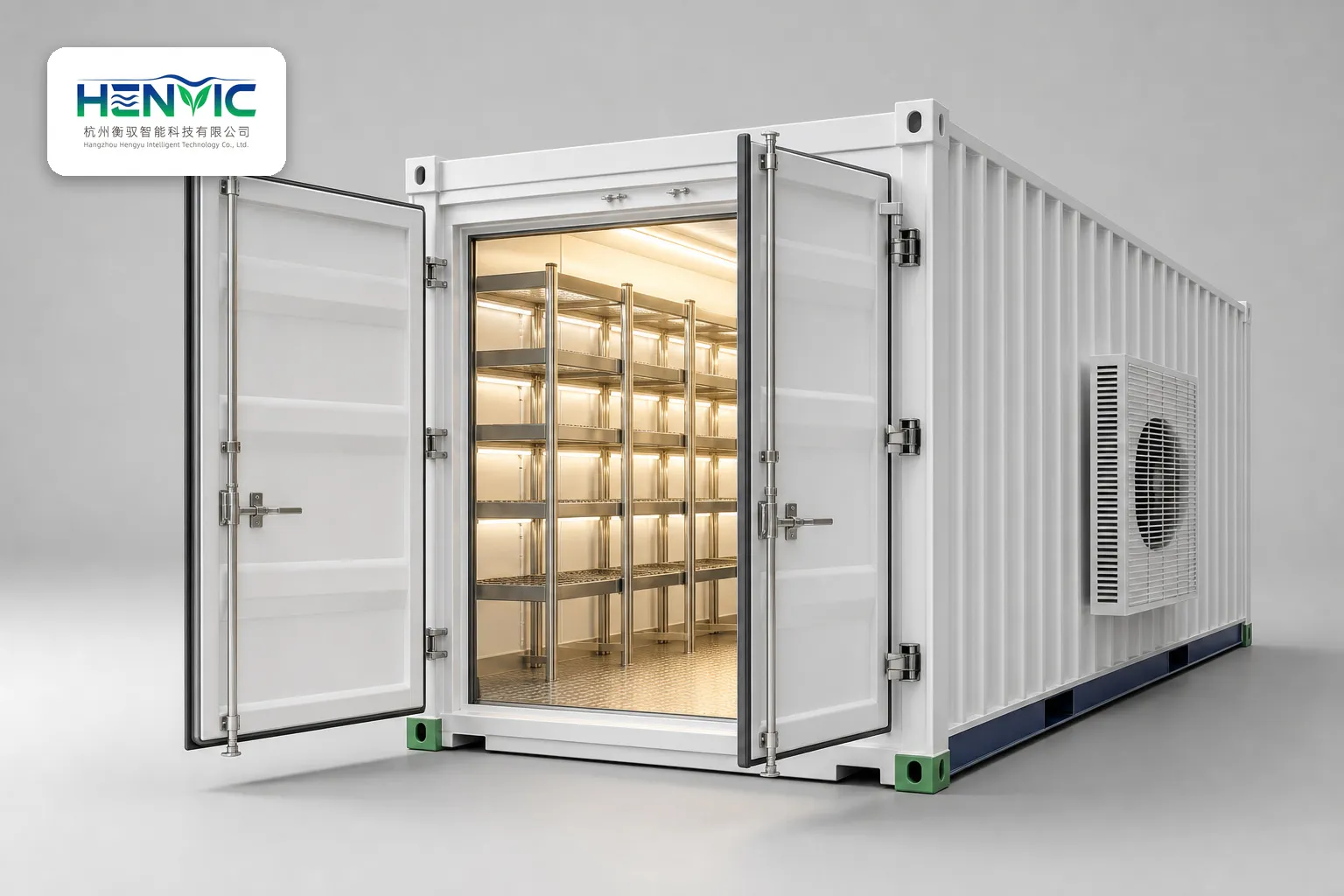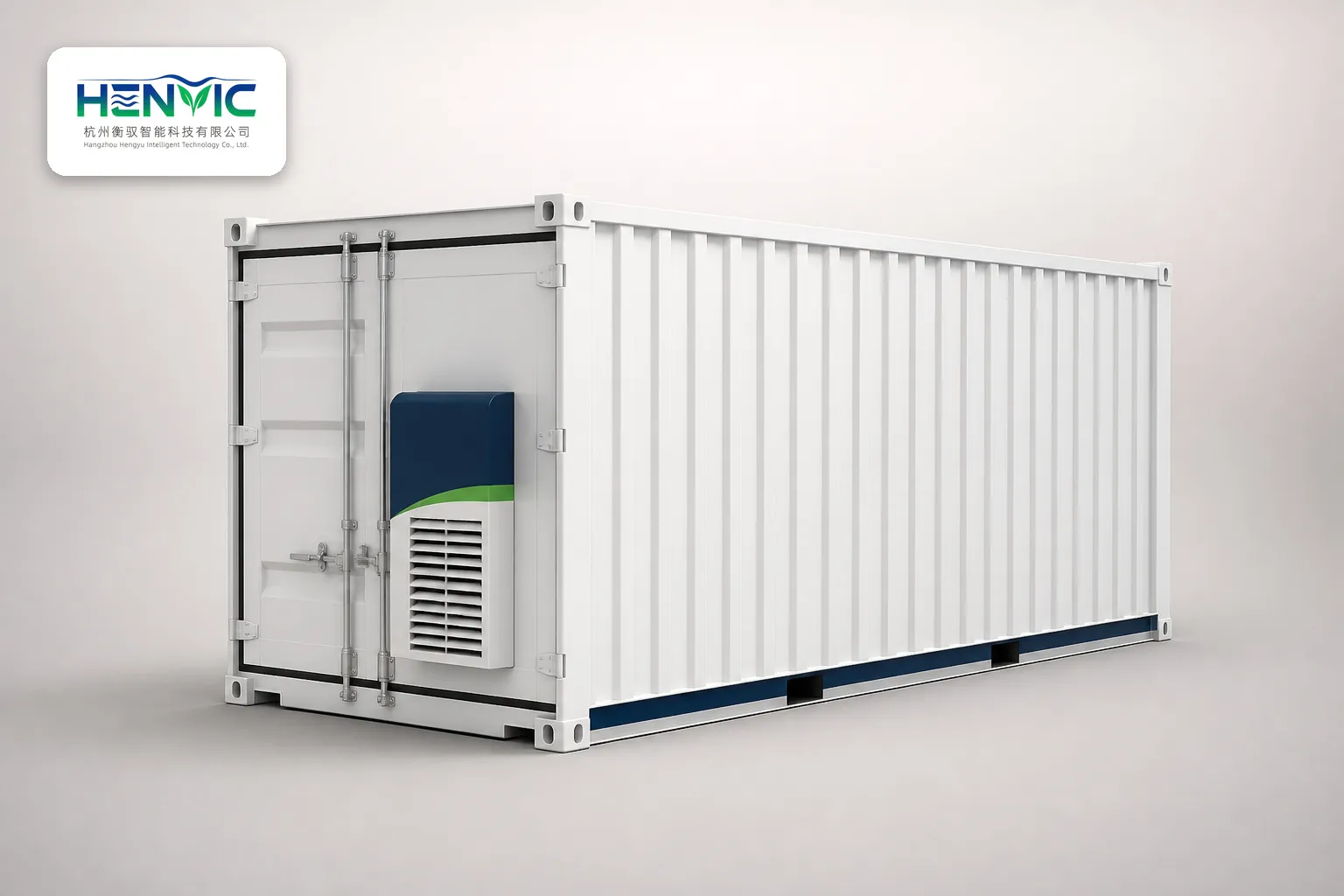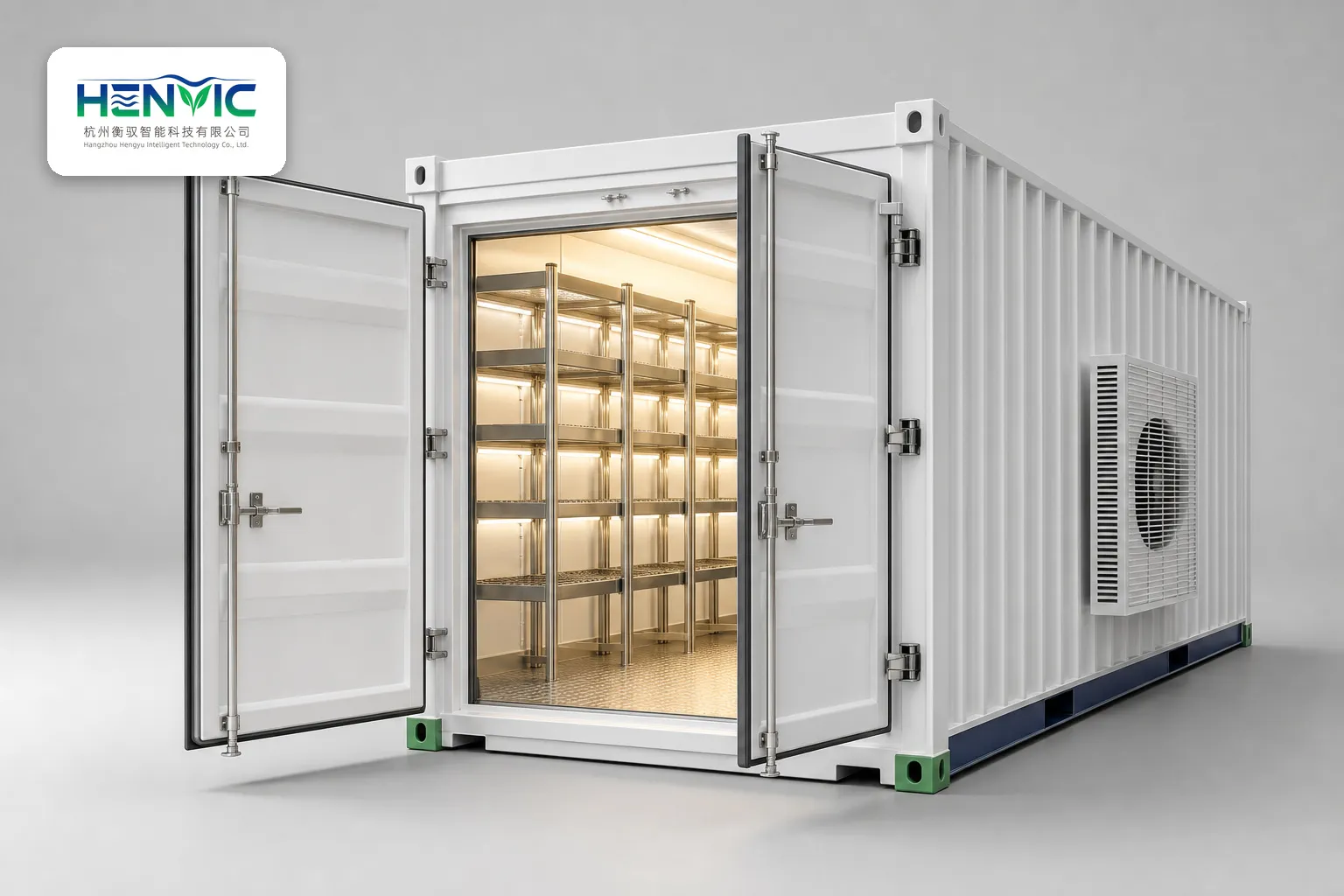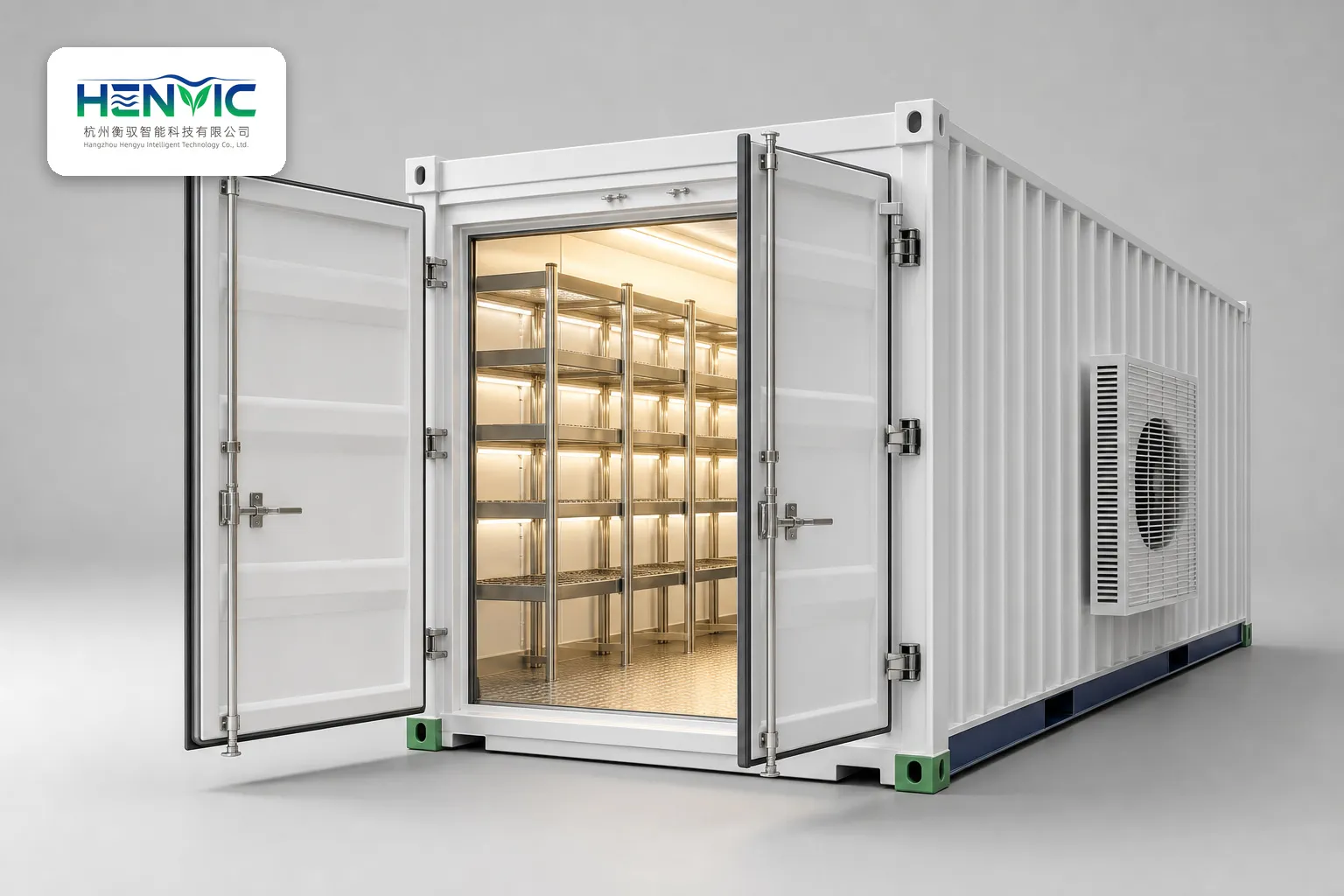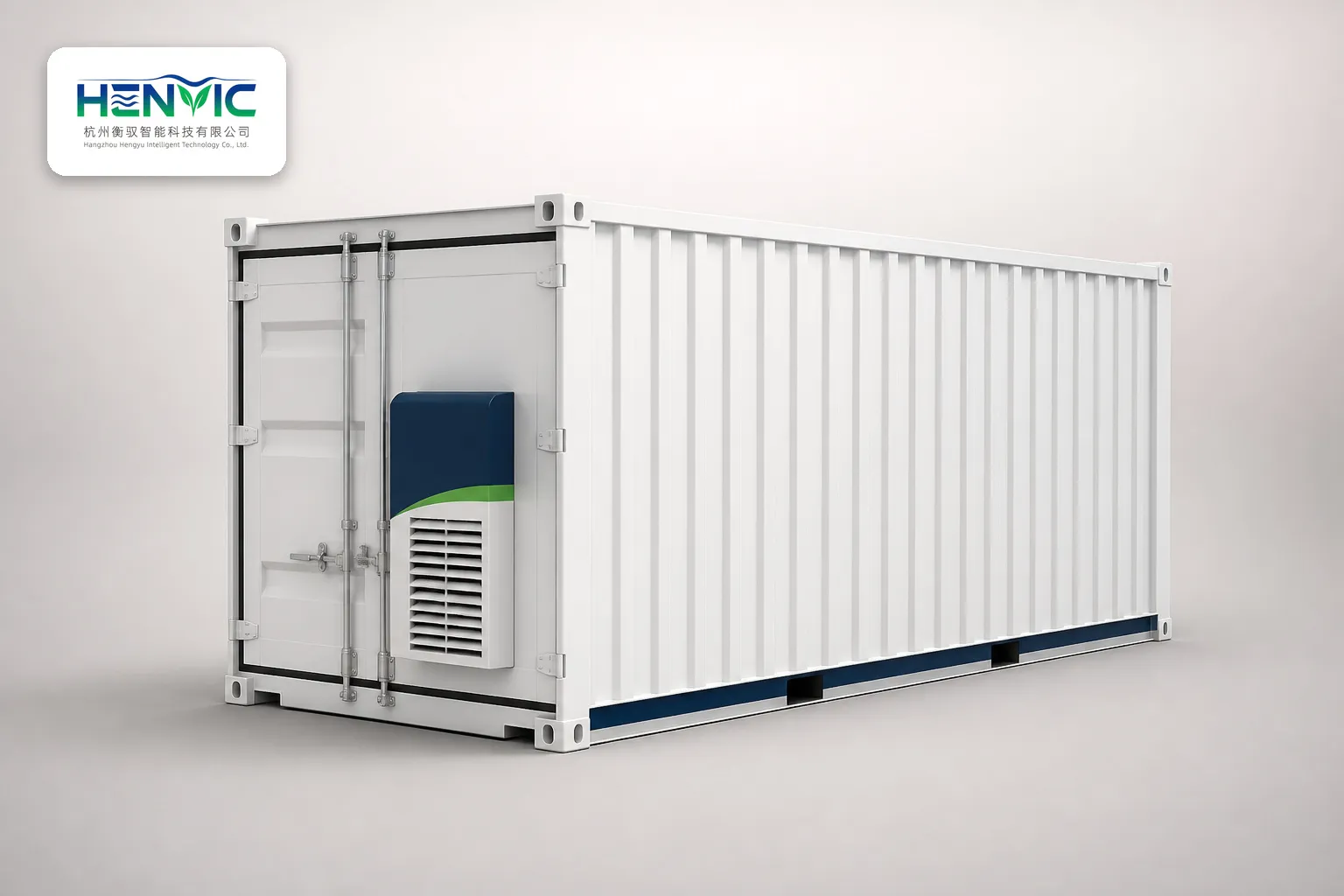
A leafy-greens cultivation container is a sealed, thermally broken, fully instrumented grow room in which photosynthesis is the dominant energy-conversion process and water is the dominant load. That single sentence explains almost every design decision in the category. Unlike a mushroom pod, where the organism is heterotrophic and the machine's job is to manage heat, humidity and CO₂ around a decaying substrate, a leafy-greens pod must manufacture light, then remove the heat that light becomes, then remove the water the crop transpires from that heat, then feed the crop with an ionic solution that is chemically unstable in real time. The container is therefore closer to a small industrial process plant than to a greenhouse, and its failure modes are process-control failures rather than horticultural ones.
1. Scope and Category Definition
The term covers several distinct products that are often conflated in marketing:
• Containerized grow rooms — insulated modules (typically derived from a 20 ft or 40 ft ISO shell, or a purpose-fabricated panel box) fitted with racks, lighting, HVAC and irrigation, used for finishing leafy crops.
• Mobile vertical farms — the same idea with vertical racking and high light density, sold as turnkey "farm-in-a-box" units.
• Nursery / propagation pods — separate modules running germination (dark, humid, warm) and seedling hardening (low PPFD, high VPD), which is a different climate regime from finishing and should not share an air path with it.
• Living-unit formats — containers producing crops sold with roots intact and still transpiring, which changes both the water budget and the post-harvest chain.
A serious deployment separates these functions. A single pod attempting germination, seedling, finishing, washing and packing in one air and one water path is an epidemiological problem before it is an economic one.
2. The Light Subsystem: The Real Cost Driver
2.1 Photometric quantities that matter
Four quantities govern the design. PPFD (photosynthetic photon flux density, μmol m⁻² s⁻¹ over 400–700 nm) sets instantaneous rate. DLI (daily light integral, mol m⁻² day⁻¹) sets cumulative carbon and morphology. Uniformity across the canopy plane determines whether one rack produces one grade or three. Spectral composition determines form as much as mass.
For common leafy greens, finishing PPFD is typically held in a band of roughly 150–300 μmol m⁻² s⁻¹, with some operations pushing higher on fast-growing lettuce and herb crops and lower on shade-tolerant or delicate leaf types; DLI targets commonly land around 12–17 mol m⁻² day⁻¹ for lettuce-class crops, with microgreens and baby leaf operating lower. These are engineering bands, not recipes — genotype, temperature, VPD and nitrogen supply all shift the optimum, and pushing light without pushing CO₂ or nutrient delivery simply buys tip burn and bolting.
2.2 Efficacy and the heat it does not avoid
Modern horticultural LED fixtures commonly deliver in the region of 2.5–3.5 μmol/J at the fixture output, with driver losses on top. This number is the single most important economic parameter in the category, because nearly all electrical energy delivered to the light eventually becomes heat inside the sealed volume. A canopy receiving 250 μmol m⁻² s⁻¹ at 3 μmol/J is being fed roughly 83 W m⁻² of light power, and effectively all of it must be rejected by the cooling system. Lighting typically accounts for the largest share of a pod's electrical draw, followed by HVAC, with pumps and controls comparatively minor.
Fixture thermal management is therefore not a reliability nicety but a load-management requirement. LED junction temperature drives both lumen depreciation and spectral shift — a fixture running hot changes its red-to-blue emission ratio, which changes crop morphology, which is then misattributed to the "recipe." Driver electronics are the most common early failure in a high-humidity environment, and their IP rating and mounting location (inside the room versus outside the thermal envelope) should be read on the spec sheet, not assumed.
2.3 Spectral control as a crop-shaping tool
Photobiology, not photon count, is where the differentiation sits:
• Red (≈660 nm) and blue (≈450 nm) drive photosynthetic efficiency and compactness respectively. Blue-rich spectra suppress stem and petiole elongation; red-rich spectra accelerate it.
• Far-red (≈730 nm) is the most consequential and most misused band. It triggers shade-avoidance responses — petiole and stem extension, leaf upward curvature, and in long-day or bolting-sensitive species, accelerated floral transition. Small far-red additions can double harvest index on some rosette crops by lifting leaves out of self-shading; the same additions can ruin a crop's shelf life or send it to seed.
• Green (≈500–550 nm) penetrates deeper into the canopy than red or blue because it is scattered rather than absorbed at the surface, contributing to lower leaves, and also improves visual inspection of the crop by operators.
• UV-B (≈280–315 nm) in short, low-dose pulses elevates flavonoid and anthocyanin accumulation and can tighten leaf texture, but it is a stressor with a narrow window and is best treated as an advanced tool rather than a default.
• Photoperiod and diel structure. Day lengths of roughly 12–18 h are common; the choice trades electricity and labour against crop quality. Dawn/dusk ramps and a genuine dark period improve stomatal behaviour, carbohydrate partitioning and operator sanity, and for bolting-sensitive species the dark-period temperature and its far-red content matter more than total light.
3. Root-Zone Architecture
The choice of delivery system determines labour, contamination risk, and how forgiving the pod is to a control error.
System
Principle
Strengths
Governing risks
NFT (nutrient film technique)
Thin flowing film in shallow channels
Very low solution volume, fast response, high oxygen exposure
Catastrophic on pump or power failure — the film is the whole buffer; channel clogging; root-zone overheating
DWC (deep water culture)
Roots suspended in aerated solution under a floating raft
High thermal and chemical buffering, simple, robust
Requires aggressive aeration; large solution mass makes corrections slow; root anoxia if DO collapses
Ebb-and-flow
Periodic flooding and draining of a tray
Familiar, good for media-based crops and heavy plants
Media adds weight and a pathogen reservoir; drain-path clogging causes flooding
Aeroponics / mist
Solution sprayed as droplets onto suspended roots
Highest water and nutrient efficiency, excellent oxygenation, roots visible for inspection
Nozzle fouling is the dominant failure; droplet size must be tuned — too fine and roots dry, too coarse and oxygen transfer drops; zero buffer volume
Media-based recirculating
Inert substrate with drip or sub-irrigation
Most forgiving, best for heavy leaf and herb crops
Substrate accumulates salts and harbours Pythium; disposal and re-use logistics
A frequently underweighted point: solution volume is a buffer, and a buffer is also a lag. A pod with 500 L of recirculating solution will drift slowly and correct slowly; a pod with 30 L will respond instantly to both a dosing error and a pathogen bloom. The right answer depends on how well the dosing and disinfection subsystems are engineered, not on a universal preference for big or small.
4. Nutrition Solution Management
This is where most container operations quietly lose yield.
Conductivity and pH. Leafy greens are commonly run at EC in the region of roughly 1.2–2.2 mS cm⁻¹ depending on crop, growth stage and climate, with pH held near 5.5–6.5. pH control and EC dosing are separate loops and must not be confused: adding acid lowers pH but also adds ions that raise EC, and adding base can precipitate phosphate and carbonate salts onto emitters. The practical consequence is that acid selection is a formulation decision — phosphoric, nitric, sulphuric and citric acids each change the ionic balance differently, and citric acid additionally feeds biofilm.
Dissolved oxygen and temperature. Root respiration requires oxygen, and the saturation concentration of O₂ falls as solution temperature rises, while microbial oxygen demand rises at the same time. Warm solution is therefore doubly bad: it starves roots and feeds Pythium and Pythiogeton. Keeping the reservoir cool and well aerated — target dissolved oxygen comfortably above the low single-digit mg L⁻¹ range — is one of the highest-return interventions available, and it is why serious pods put the reservoir outside the hot volume or actively chill it.
Ion antagonism and drift. Potassium, calcium and magnesium compete for uptake; sodium and chloride accumulate in a closed recirculating loop because they are taken up poorly and never leave; nitrate depletion shifts pH. A closed system without either periodic solution exchange or an ion-removal path will drift toward a composition the recipe never specified. This is the central argument against "zero discharge" as an unqualified virtue.
Disinfection. Recirculating solution is disinfected by UV at 254 nm (effectiveness governed by dose in mJ cm⁻², which in turn depends on flow rate, lamp ageing and solution UV transmittance — turbid or iron-rich solution kills the design dose), by ozone with adequate contact time and off-gas destruction, by slow-sand or membrane filtration, or in high-throughput European practice by thermal pasteurisation of the drain-run. Any of these requires a validated dose, not a device that exists.
5. Air, Water and the Heat Balance
5.1 The load decomposition
Inside a sealed pod the energy balance is unforgiving:
• Sensible gain from light fixtures (nearly all fixture power ends up as heat in the room), from drivers, from fans, and from infiltration through the envelope.
• Latent gain from transpiration, which for a dense canopy of leafy greens is substantial — the water the crop takes up is overwhelmingly lost through stomata, and it must be condensed out somewhere.
• Cooling demand that is therefore latent-dominated. The sensible heat ratio in a canopy-heavy pod can sit well below that of a conventional air-conditioned room, which is exactly the condition where an HVAC unit sized on cooling capacity alone fails: it hits temperature setpoint, stops the compressor, and lets humidity climb until condensation forms on every cold surface.
The correct specification language is dehumidification capacity at the design room condition, expressed in litres per day, alongside the sensible capacity. Ask for both numbers and for the assumed canopy density.
5.2 VPD as the master variable
Vapour pressure deficit — the gap between the air's water-holding capacity and its actual content — governs transpiration, and therefore governs mineral delivery to leaf margins. Leafy greens are commonly managed in a VPD band of roughly 0.8–1.2 kPa. The consequence of running too tight (high RH, low VPD) is the most characteristic quality defect in this category: tip burn. Calcium moves in the xylem only with the transpiration stream, and it accumulates where water evaporates — the leaf margins and tips. Suppress transpiration and calcium stops reaching those tissues even when the solution contains plenty of it, producing necrotic, browning leaf tips that are a total loss at grading. Tip burn is a climate-control failure, not a nutrient deficiency, and it is the single most common reason a high-yielding pod produces unsaleable product.
Running too loose is the mirror error: stomata close, growth stalls, and the crop spends its energy budget on defence rather than leaf area.
5.3 CO₂ enrichment
Ambient air sits in the low hundreds of ppm and is limiting for a well-lit canopy. Enrichment into roughly 800–1,200 ppm is standard practice where the economics justify it, delivered as liquid or solid CO₂ or from purified combustion. Two cautions: enrichment only pays if light, nutrients and temperature are simultaneously non-limiting, and a leaky room wastes the gas while a tightly sealed room accumulates it to a level that is an occupational hazard in an unoccupied space with no interlock. Combustion-based generators add heat and, if mis-set, nitrogen dioxide — a phytotoxic contaminant in a sealed volume.
5.4 Water accounting
Recirculating soilless systems use dramatically less water per kilogram of production than field agriculture, and a well-built pod recovers most of its irrigation for re-use. The honest accounting, however, must include the water that leaves as condensate, the water lost in solution exchange and disposal, and the water used in wash-down. Condensate is not clean water — it has passed over a cold coil in a room with biological aerosols — and routing it to reuse requires treatment or is better routed to drain.
6. Control Layer and Sensing
A competent pod runs cascaded loops on air temperature, humidity, solution temperature, pH, EC, dissolved oxygen and CO₂, with logging on every channel and alarms on deviation. The differentiators are:
• Redundant sensing at both ends of the room and at two heights, not one sensor beside the controller. Canopy-level temperature and humidity differ from ceiling-level readings, and the crop only experiences canopy level.
• VPD computed and controlled, rather than temperature and RH independently.
• Documented fail-safe behaviour. A dosing pump stuck open will overshoot EC within minutes; a solenoid stuck open will flood; a humidifier that stays on a bad reading will wet walls and trigger a Botrytis event. Ask what each actuator does on loss of signal and loss of power.
• Recipe management with per-batch logging, because traceability and root-cause analysis both depend on being able to reconstruct the environment a specific harvest lot experienced.
• Power resilience. A short outage is survivable in a deep-water system and can be fatal in NFT or aeroponics within an hour in a warm climate. Automatic restart, phase-loss protection, and a generator or UPS path for pumps and controllers are not optional in those architectures.
7. Crop Biology Specific to Leafy Greens
Beyond tip burn, the recurring physiological issues:
• Bolting (floral initiation). Driven by temperature, photoperiod, the red-to-far-red ratio, and genotype, and it is irreversible once initiated. Bolting ruins yield and bitterness, and it is the most common cause of a total batch loss in warm-climate pods. Countermeasures are harvest-window compression, cool dark-period temperatures, spectral management, and — most reliably — choosing bolt-tolerant varieties for the season.
• Internal rust / pink midrib and physiological discoloration, largely atmosphere- and temperature-related, and often a signal of an over-tight or over-loose VPD regime.
• Leaf-tip and margin chlorosis, and marginal necrosis from potassium or calcium imbalance, or from salt accumulation in a closed loop.
• Nitrate accumulation in petioles under high nitrogen with insufficient light or short finishing periods — a quality and compliance concern where limits exist.
• Weak, elongated, pale growth from insufficient PPFD, excessive far-red, or excessive temperature with low VPD. This is the visual signature of an under-lit or over-heated pod, and it is fixable only by changing the energy budget.
• Cuticle and wax development, which determines post-harvest water loss and shelf life, is strongly shaped by VPD and airflow during finishing. A crop grown in still, saturated air looks beautiful in the pod and wilts on the shelf.
8. Crop Portfolio and Segmentation
• Head and loose-leaf lettuce — the volume anchor, fast cycles, well-characterised light and nutrition responses, thin margins.
• Baby leaf and mixed salads — higher labour per kilogram, strong retail demand, benefits from uniformity and repeatable cut-and-regrow cycles.
• Brassicas (kale, mizuna, tatsoi, pak choi) — robust, good shelf life, tolerate more environmental variation.
• Arugula and peppery leaves — glucosinolate and erucic-acid-related pungency is environmentally modulated; light and temperature can be used to tune flavour intensity, which is a genuine product differentiator.
• Herbs (basil, mint, coriander, dill) — the highest-value-per-volume segment and the most sensitive to airflow, VPD and chilling injury; basil in particular punishes a cold reservoir.
• Microgreens and shoots — very short cycles, low light requirement per crop, high labour intensity, and a strong fit for small-footprint container formats and direct-to-channel sales.
• Spinach and cold-adapted crops — long-day and temperature-sensitive; photoperiod leakage from an unshielded pod can trigger bolting, which is a real design requirement for light-tightness.
9. Biosecurity and Integrated Pest Management
A sealed pod is a defensible perimeter, and the defensible perimeter is exactly why failures inside it are so expensive: there is no natural enemy community, and a single aphid or thrips introduction into a warm, high-humidity, pesticide-restricted volume multiplies without check.
Practical controls: a double-door airlock or gowning vestibule at the personnel entry; filtered intake air; a quarantine bench for incoming seedlings and a rule that no nursery material enters the finishing room unobserved; sticky traps and routine scouting as a data stream rather than a formality; seed and substrate sourcing documented, because many leafy-greens pathogen introductions arrive on seed coat or in contaminated media; and tool and cart hygiene between rooms, since the vector is usually a hand, a crate or a hose.
Where biological control is used, the pod must be treated as a release enclosure — beneficials have no refuge from a mis-timed HVAC cycle or a broad-spectrum cleaning agent, and pesticide residue on surfaces will kill a programme that was just purchased.
Powdery mildew, Botrytis, downy mildew and Pythium root rot all track the two variables under operator control: leaf-surface wetness duration and VPD. Condensate dripping from a ceiling, a cold bridge, or the underside of a light fixture onto a canopy is a disease event in waiting, and it is also a cosmetic downgrade — water spots on leaves reduce grade directly.
10. Food Safety and Regulatory Position
Leafy greens are a ready-to-eat, high-moisture crop consumed raw, and they carry a documented history as a vehicle for Listeria monocytogenes, Salmonella, and Shiga-toxin-producing E. coli. A container does not change that risk profile; it changes which controls are available.
Controls that matter in practice: source water quality and its testing regime; management of the recirculating reservoir as a potential amplifier, including disinfection validation and biofilm control; separation of raw-material and harvested-product flows; post-harvest wash chemistry (chlorine, peracetic acid, electrolysed water — each with a dose, contact time, and residue limit that must be verified against the destination market's rules) and wash-water change frequency; precooling, because a crop leaving a 22 °C room into a delivery van has already lost shelf life; personnel hygiene and health exclusion; and lot-level traceability linking seed lot, solution regime, harvest date and pack line.
Regulatory framing differs materially by jurisdiction and changes over time. In the United States, produce-safety requirements under the food-safety modernisation framework apply with thresholds and qualified-facility exemptions tied to sales volume and buyer type. In the European Union, organic certification rules have historically been predicated on soil-based production, so substrate and hydroponic systems are treated differently there than in the US national organic programme, where soilless production can be certified. These are exactly the kinds of provisions that are amended, and a buyer or operator should confirm the current text applicable to their site, scale and destination market rather than relying on a vendor's compliance claim or on a summary such as this one.
Additional site-level items that are routinely discovered late: electrical service capacity and phase, refrigerant handling and certification marks for the destination jurisdiction, condensate and nutrient-discharge disposal permissions, noise limits near residential boundaries, and local fire-code treatment of high-density electrical loads in an occupied-volume enclosure.
11. Unit Economics
The container is one line in the cost stack. A defensible model includes:
Capital — module and envelope, lighting (which is often the largest single component and the fastest to become obsolete), HVAC with genuine latent capacity, racking, irrigation and dosing, reservoir and chilling, seedling and sowing capability or a purchase agreement for it, wash/precool/pack, plus the unbudgeted items: electrical upgrade, water supply, drainage, foundation or pads, delivery and crane set.
Operating — electricity, dominated by lighting and dehumidification; nutrient salts and acids; seed and substrate; labour, which for leafy greens is the largest recurring line because sowing, thinning, harvesting and packing remain hand operations in most pods; consumables and cleaning chemicals; and losses, which include grade-out from tip burn and bolting and are the difference between a model that works and one that does not.
Metrics worth using rather than marketing numbers: saleable Grade-A kg per m² of canopy per week, grams of saleable product per kWh, litres of freshwater consumed per kg, cycle time from sow to cut including fallow and clean-down, and first-pass grade yield. Biological productivity per square metre is easy to claim; grade-adjusted throughput per unit of electricity and per unit of labour is what determines whether the pod survives.
Redundancy and fleet logic. One pod has no redundancy: a compressor failure, a dosing error, or a labour gap stalls the entire pipeline. Commercial deployments use N+1 modules on staggered cycles, with a centralised nursery supplying seedlings so that the hardest contamination-controlled step is done once, professionally, for many finishing rooms. That architecture — central nursery plus distributed finishing pods — is the format that has scaled best, because it converts the container from a farm into a repeatable, replaceable process cell.
12. Observed Failure Modes
• HVAC sized on cooling capacity, not dehumidification. Temperature holds; humidity climbs; condensation forms; Botrytis follows.
• Single-point sensing while the far end of the room runs a different climate, producing two grades from one batch.
• Low VPD operation to "protect humidity," producing tip burn and structurally weak leaves that collapse in the bag.
• Fixture thermal mismanagement, causing accelerated lumen depreciation and spectral drift that is then misdiagnosed as a seed or nutrient problem.
• Nozzles and emitters fouling in aeroponic and NFT systems, with no redundancy and no visible alarm — a crop can be lost in a single afternoon.
• Reservoir temperature creep, driving dissolved oxygen down and Pythium up, typically in summer, typically blamed on the seed supplier.
• Ion accumulation in a closed loop with neither exchange nor removal, producing a solution that no longer matches the recipe.
• Light leakage into a photoperiod-controlled room, bolting long-day crops.
• Condensate drip onto the canopy, causing both disease and cosmetic grade loss.
• Missing workflow design. A pod that grows well but has no room for a sowing bench, a crate, a wash station, a cold box or a person to turn around will lose more to handling than to horticulture.
• Cycle-time optimism that omits clean-down, drying, fallow and labour reality.
13. Buyer's Due-Diligence Checklist
1. Request the latent-load calculation with assumed canopy density, fixture power per m², and design outdoor condition — and the resulting dehumidification capacity in litres per day.
2. Ask for PPFD maps and DLI at canopy level, measured, not calculated from fixture datasheets, plus uniformity figures across the widest rack.
3. Confirm fixture and driver IP rating, mounting location, and warranty terms for a high-humidity environment.
4. Verify canopy-level sensing at multiple positions and heights, and how VPD is computed and alarmed.
5. Establish fail-safe states for every actuator on signal loss and power loss, and the pump/controller backup provision.
6. Insist on disinfection dose validation for the nutrient loop, with UVT assumptions stated.
7. Check reservoir volume, chilling, and solution-exchange policy — including where the spent solution goes and whether discharge is permitted on the site.
8. Inspect for cleanability: drains, rack feet, cable penetrations, light fittings, and whether surfaces can be washed down without damaging electrical components.
9. Obtain electrical, refrigerant and machinery certifications for the destination jurisdiction, in writing, with model numbers.
10. Test the transition behaviour: how fast can the room move from a finishing regime to a different VPD or temperature setpoint for hardening or for a bolting-sensitive crop?
11. Quantify the service dependency: spare-part lead times for lamps, drivers, pumps and compressors, and remote-diagnostic capability. A four-week driver lead time is four weeks of lost crop.
12. Run the model on grade-adjusted kg per m² per week and grams per kWh, with an explicit loss allowance.
13. Visit a unit at least six months into production, and look at the grading table rather than the canopy.
14. Direction of Travel
The category is moving from boxes toward process systems. Expect continued growth in dynamic spectral programming — far-red and UV protocols used deliberately to shape harvest index, flavour compounds and shelf life rather than to maximise photon count; in model-predictive control that treats temperature, VPD and CO₂ as coupled variables and optimises against an energy price signal, shifting light and load within the day; in closed-loop nutrient management with partial ion recovery and validated disinfection, driven as much by discharge regulation as by water cost; in machine-vision phenotyping that estimates leaf area, biomass and tip-burn incidence per tray and feeds it back into the climate recipe; and in robotic sowing, transplanting and harvesting that attacks the labour line, which is where the cost actually sits.
Structurally, the winning configuration is unlikely to be the heroic single container. It is centralised propagation, distributed finishing, standardised modules, and a data layer that makes every room interchangeable — because that architecture converts the two hardest problems in this business, contamination control and labour scheduling, from craft into process.
The framing worth carrying into any investment decision is the same one that applies to the mushroom equivalent, with the emphasis shifted: a well-engineered pod solves the environment problem, and in leafy greens the environment problem is bigger and more expensive than it looks, because light is the input and heat and water are its unavoidable by-products. It does not solve seedling quality, nutrient discipline, grade-out, labour or market access. Those remain the business.

On evidence and boundaries: this article describes established engineering practice in controlled-environment leafy-greens production. The numeric ranges cited — PPFD and DLI bands, fixture efficacy, EC and VPD windows, CO₂ enrichment levels — are typical engineering bands rather than fixed specifications, and the correct values for any crop depend on genotype, climate, energy price and target grade. Regulatory treatment of soilless production, organic certification, wash-water chemistry limits and produce-safety obligations varies by country, state and destination market and is amended over time; confirm against the current text of the applicable authority before committing to a build or a market claim. No specific vendor, product or market-size figure is asserted here.